
Use of Terms
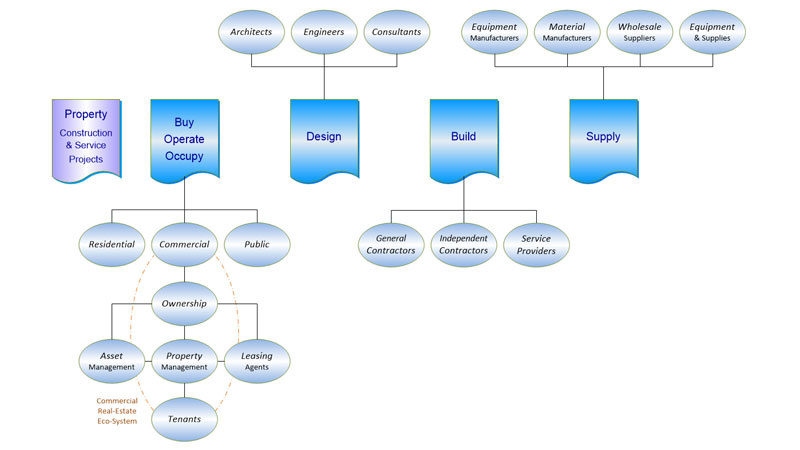
Service Provider Ecosystem
Applies to individual property assets and industry.
Service Provider
Service provider is a broad term referencing all organizations that perform work on physical property including property management, AEC professionals, independent contractors, local agencies and general services that doesn’t require contractor licenses.
Industry Data
Used broadly the term embraces all data including property assets, service providers, regulators and supply chains.
Supply Chains
Product and equipment manufactures, construction supplies, local distributors and distribution channels, etc.
Digitization of Physical Property
Digitization of Property Operation
Hierarchy
that begins with the physical asset and permeates through a interconnected system of service providers who . . .
anonymous
intermediaries (persons and technology) between an original data source, its consumer and final destination (i.e.: the physical property).
Portable – universal application
Flexible- emerging technologies
Affordable – inexpensive literally
Seamless – out of sight
Dynamic- on-demand readiness
Transparent – exchange routine automation
Reduce human process – eliminate literally
No learning curve – literally new generation
Data sources, information flow and digital objectives while shared is characterized by coveted highly protected private data. It reveals an industry eager to adopt technology without insight to the fundamentals of industry data and demand.
| Market Demand | Scope |
|
universal application |
|
emerging technologies |
|
literally inexpensive |
|
on-demand readiness |
|
autonomy & detail |
|
literally eliminate step(s) |
|
literally, new generation users |
CaPSCi
Construction Project Supply Chain Infrastructure™
CaPSCi
Construction Project
Supply Chain Infrastructure™
The architecture was designed in-part to facilitate technology adoption across individual stakeholders minimize expense, assure technology portability, and workflow integration between service sectors and independent organizations.

How Build Data is Leveraged
in Property Operation0:52
Initial Objectives
CaPSCi research was envisioned from a unique perspective of the physical property’s deep data and its service provider ecosystem. We started with a simple goal of determining methods and techniques for connecting contractors to property and industry data. The objective was improving service provider efficiency and elimination of human error in construction and related services.
However, overcoming barriers to the digitization of property operation requires a deeper understanding of the industry’s fragmented ecosystem, stakeholder independence, distributed data sources and complexity in how property data originates, is consumed and creates value.
Universal Connectivity
Effectively connecting stakeholders digitally required a secure unified solution property and construction technologies could leverage to identify physical assets, build and service projects to data and people in cyberspace.
The lack of corporate cohesion in real estate mandated identity tech be individually acquired and managed. Emerging demand for AI data provided validation of this individual management hypothesis.
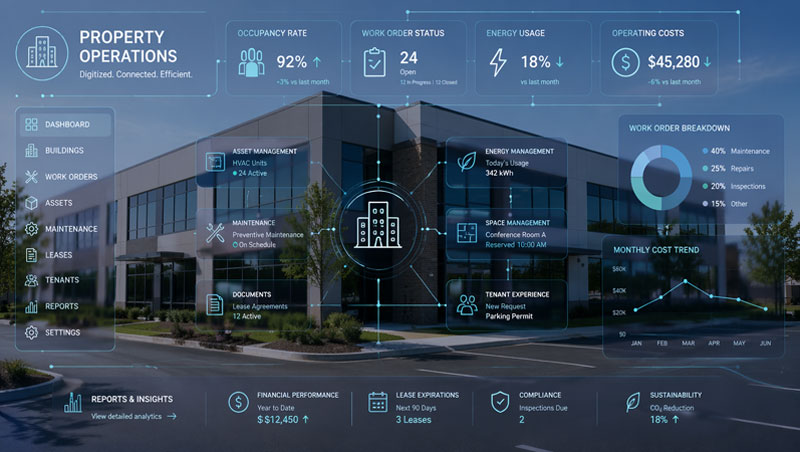
The lack of corporate cohesion in real estate mandated identity tech be individually acquired and managed. Emerging demand for AI data provided validation of this individual management hypothesis.
Contractor Data Use-Cases
Digitization of build and property operations requires comprehensive security technology that’s portable between property and industry data, projects and stakeholders whether it’s new construction, commercial repairs and upgrades or residential maintenance.

Digitization of build and property operations requires comprehensive security technology that’s portable between property and industry data, projects and stakeholders whether it’s new construction, commercial repairs and upgrades or residential maintenance.
Broader Use-Case
Market Barriers
Challenges to the digitization of property operation extends to market demand and adoption of technology. Successfully navigating the barriers to market adoption required a clear understanding of each data use-case including the economics and expectations of technology.
The CaPSCi framework resolved barriers to information exchange and technology adoption. Individualized credentials allow users to shift between multiple platforms through a single interface, dynamically integrate project data and autonomously exchange static detail.

Ecosystems
- Fragmented
- Diverse
- Independent
- On-Demand
- Direct Expense
- Revenue Expense
- Backend Operations
- Frontend Operations

Stakeholders
- Independence
- Small-Medium Size
- Low Margins
- High Expense
- Admin Overhead
- Low Tech Use
- Interest
- Cost

Data Flow/Value
- Complex Use-Cases
- Distribution
- Destination(s)
- Intermediaries
- Augmentations
- Integrations
- Documentation
- Private vs Public

Market Demand
- Portable
- Flexible
- Affordability
- Transparent
- Reduce Process
- Dynamic
- Zero Learning Curve
Data Relationships
property, management, contractors and supply chains
Project, Contractor & Industry Data
Project data and supply chains emerge automatically with every property upgrade and improvement through bid and contractor selection processes. The scope of work may define certain parameters but selected contractors further define material sources and information included in the project’s physical and digital deliverables.
The digital deliverables of build, improvements, maintenance even systems operation represent original data sources. Information collected from manufacturers and suppliers passed through contractors has sustainable value in the long term service and maintenance of enhancements.
Project data and supply chains emerge automatically with every property upgrade and improvement through bid and contractor selection processes. The scope of work may define certain parameters but selected contractors further define material sources and information included in the project’s physical and digital deliverables.
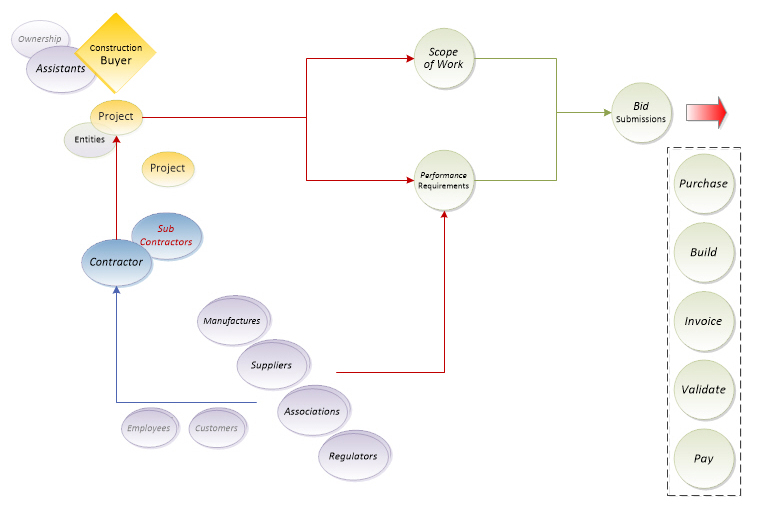
Supply chain infrastructures emerge autonomously
through the normal course of business
To a contractor, information on property, build and service projects can pass through four administrative processes before work on physical deliverables begin. Property improvements and maintenance are exhaustive processes that consume 35% of our time in administrative tasks. Data and human error cost considerable more.

Digital credentials are seamless to users and provide enhanced transparency between project stakeholders, technology platforms and industry supply chains.
Learn more about property AI data, its value and utility